
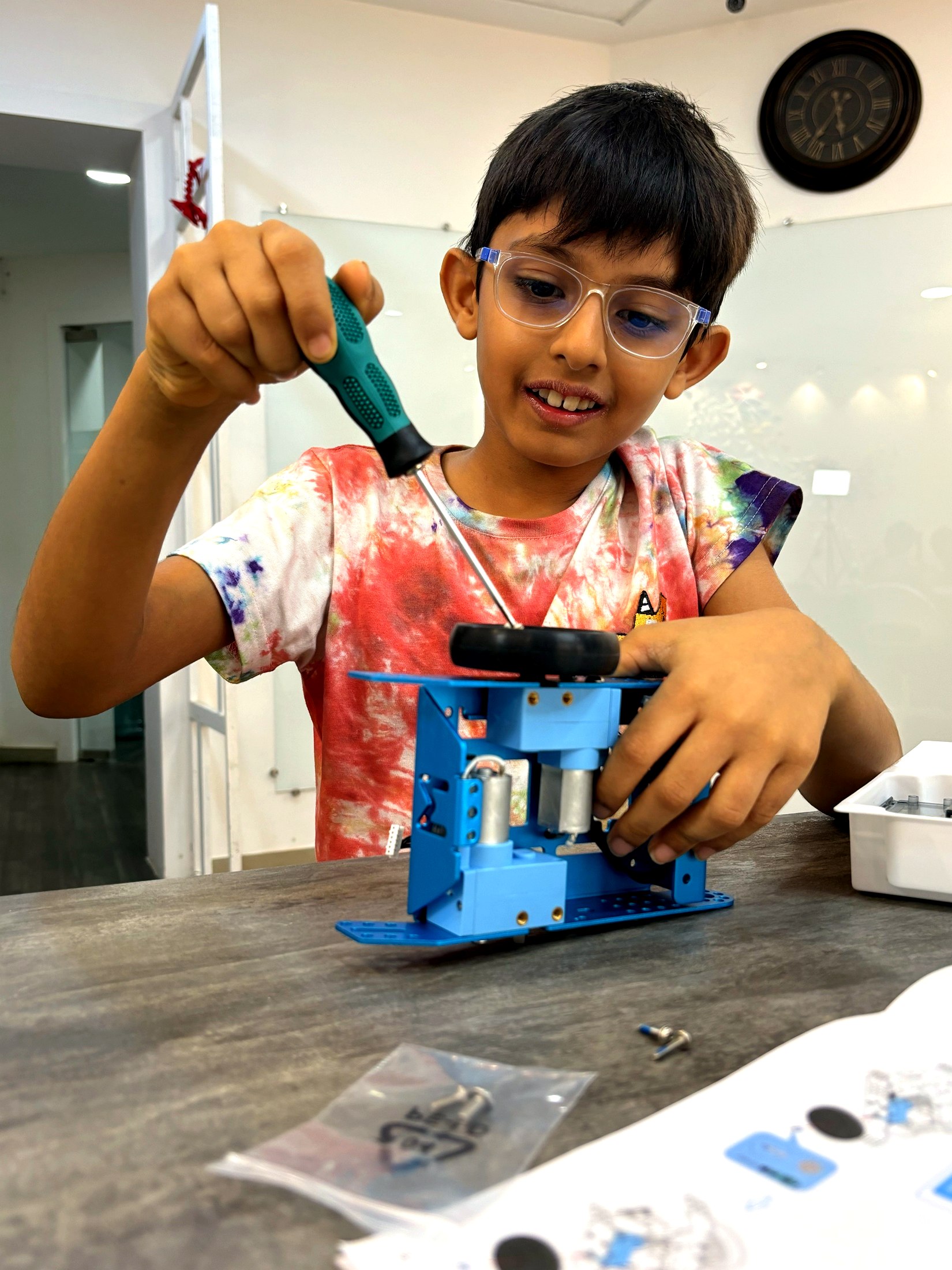
Every journey ends the same way: a room, a row of tables, and an open door. Demo Day isn't a graded presentation. It's the first time a child's creation meets people who owe them nothing.
The two-minute rule
Each child gets a table, a screen, and two minutes to explain what they made and why anyone should care. No slides about "potential." No promises about things that don't exist yet. Only real, working things.
This year that meant:
- A planter that waters a basil plant on its own and messages when the tank is low.
- A pocket-money app a parent downloaded on the spot.
- A little robot that lost a race by a whisker, and immediately started planning version two.
Why a deadline beats a syllabus
The week before Demo Day is the most honest week of the term. Big ideas get trimmed. "Nice to have" features quietly disappear. Children learn (fast, and on their own) that a smaller thing that works beats a bigger thing that almost does.
That lesson is hard to teach in a classroom. It's easy to teach with a date on the calendar and a stranger walking toward your table.
"I thought I was done," one child told a mentor, "until someone who wasn't my friend tried to use it."
Demo Day is loud, a little chaotic, and occasionally held together with last-minute tape. We wouldn't change a thing.