
01
Pick something to make
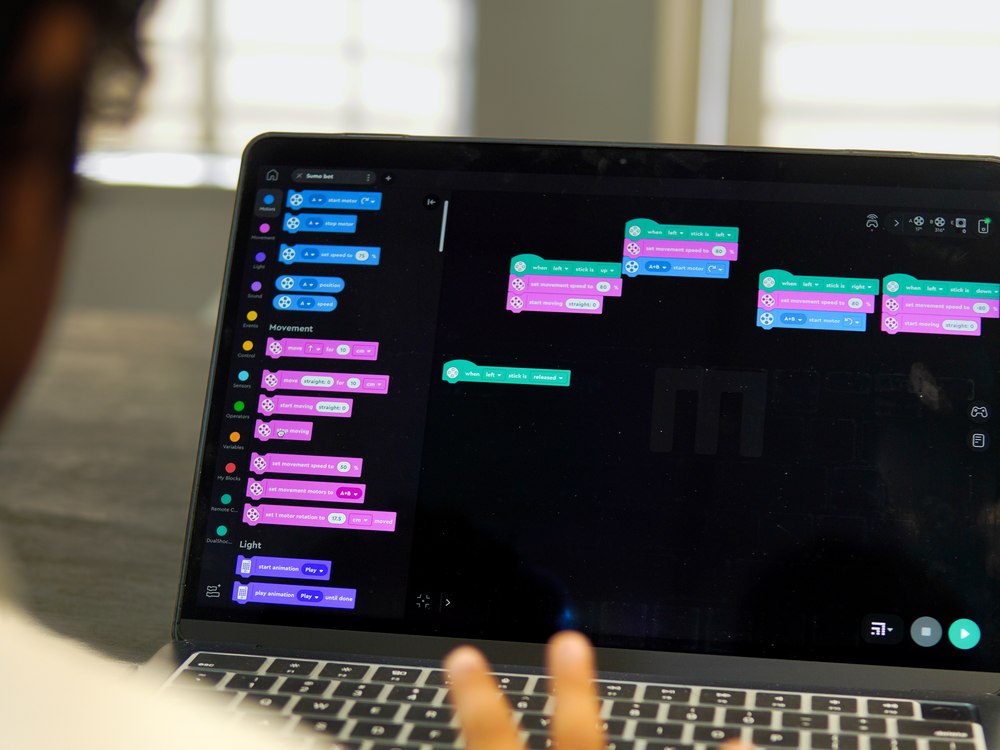
Your child chooses something they want to build: a game, an app, a robot. The idea comes first, not a chapter to get through.
Hands-on from the first minute. Your child learns by making real things, with a mentor close by, and the lessons arrive exactly when they're needed, so they're used, not just remembered.
Children learn best by doing, so that's how we teach.
Most classes explain something, then test if your child remembers it. We do it the other way round. Your child starts making something they care about (a game, a robot, an app) and learns each new thing at the exact moment they need it to move forward.
When a lesson helps you finish the thing you're excited about, it sticks. That's the whole secret.
Every project your child makes follows the same easy rhythm. It becomes a habit, and that habit is what grows them.
Your child chooses something they want to build: a game, an app, a robot. The idea comes first, not a chapter to get through.
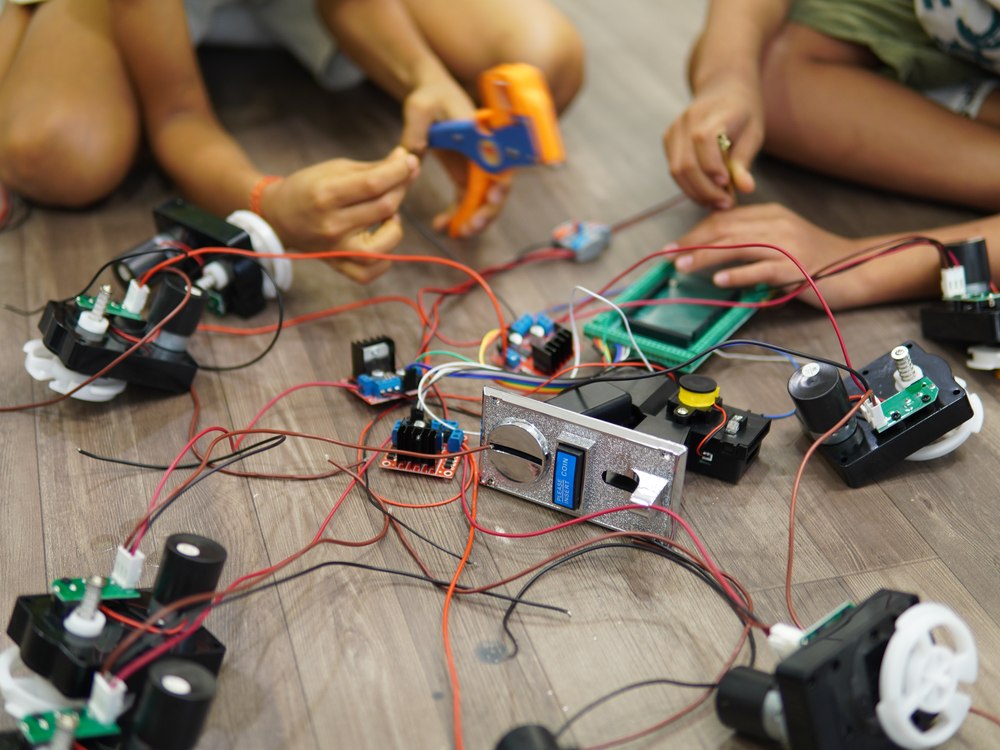
They pick up each new skill exactly when their project needs it, so it makes sense, and they never wonder “why am I learning this?”
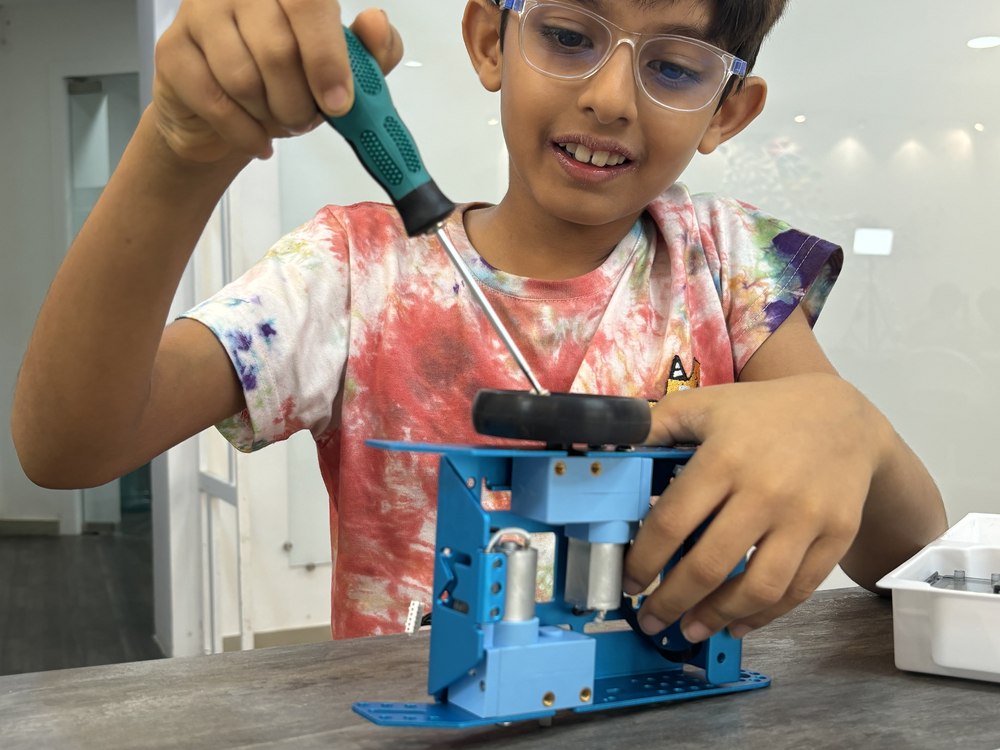
They don't stop at “almost.” The goal is a real, finished thing: a game you can play, a robot that moves, a machine that actually works.
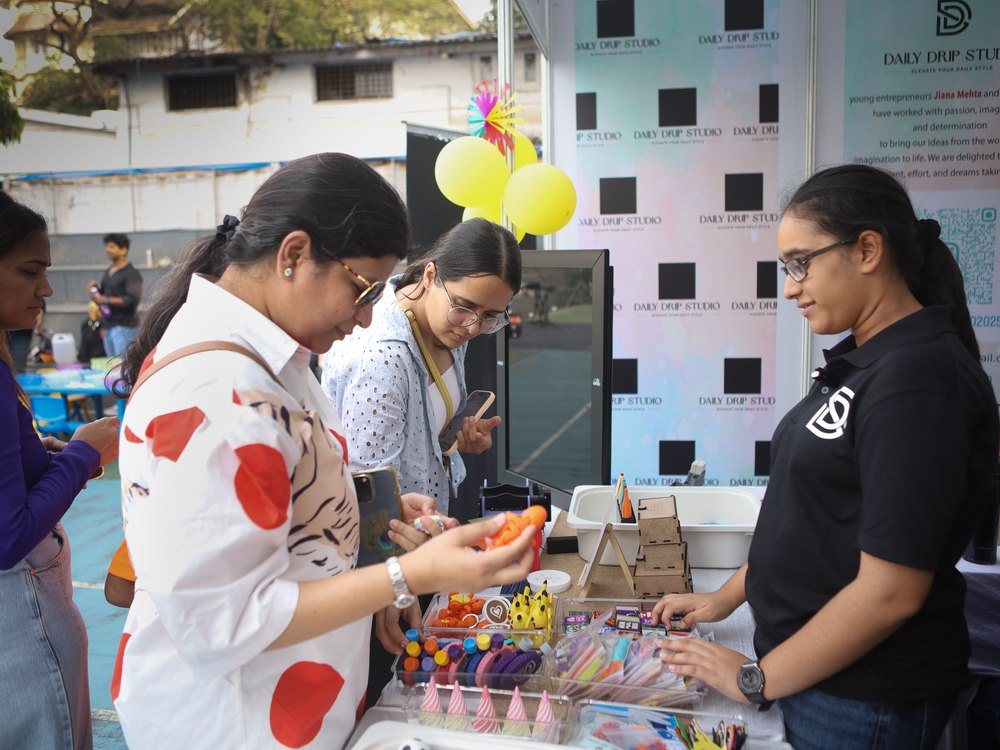
They show what they made to someone who didn't help build it. That moment (“look what I made”) is where confidence quietly grows.
Not ahead, not behind, just where the next challenge is the right kind of hard. Age doesn't decide it; your child does.
Before they start, we watch how your child thinks through a problem and have a friendly chat with you. No test to cram for.
Your child begins at the stage that truly fits, whether they're 6 or 16.
A child climbs to the next stage (Explorer → Builder → Engineer → Founder) only once the one below is truly solid. Real confidence is never rushed.
Small enough that a mentor knows exactly what your child is working on, and what they're stuck on.
Real makers working right beside the kids: caring, patient, and hands-on. No one lecturing from the front.
The same real tools that grown-up makers use, just sized to fit young hands. Your child isn't playing pretend.
Every class moves your child's project forward. They leave with real progress you can see, not just notes.
The best way to understand it? Watch your child do it.
Book a free visit and your child will try the whole thing once (pick something to make, get it working, and show it off) all in a single class. In an hour, you'll both know.