
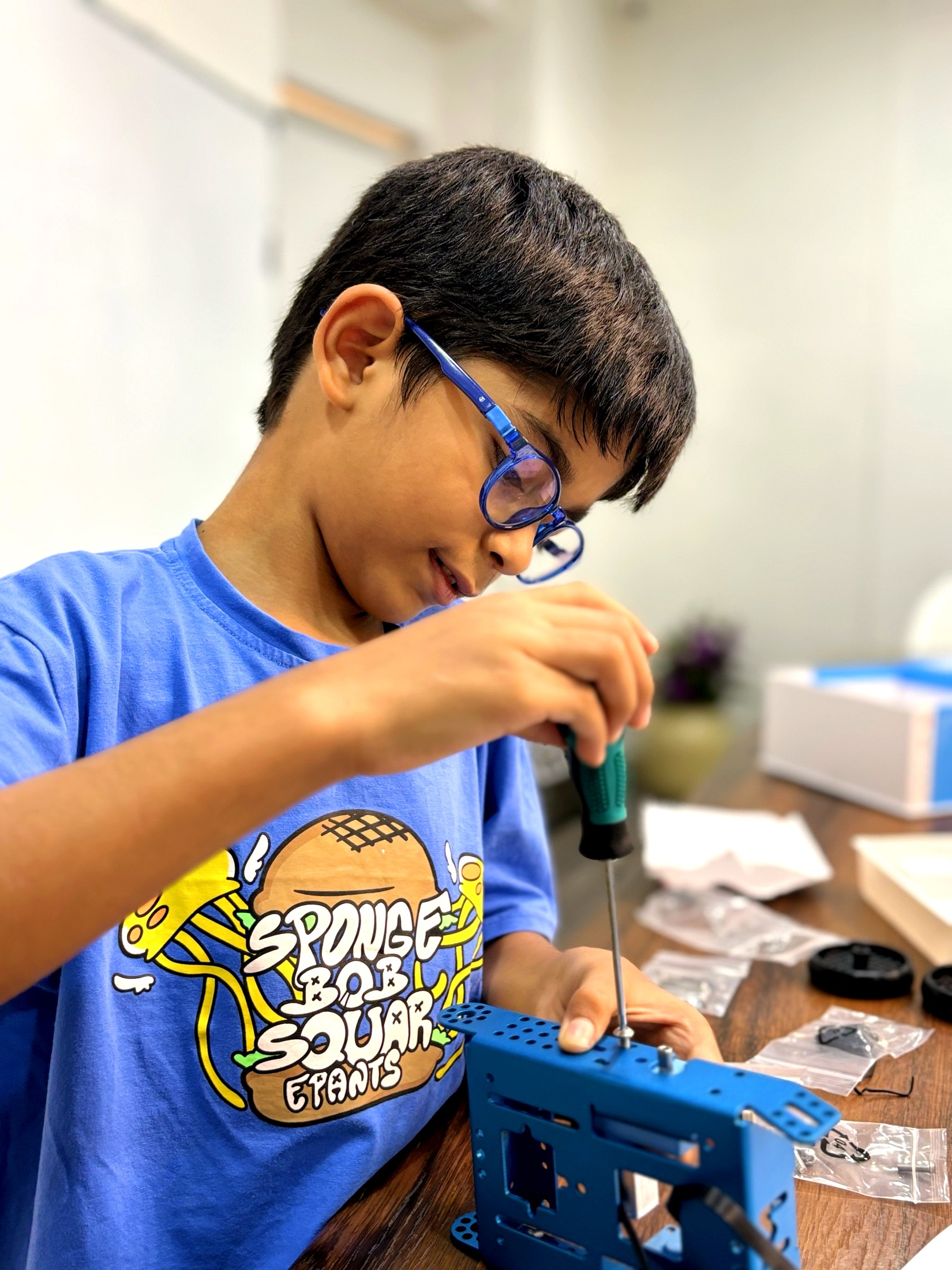
For a year, Sara built on a screen: games, a small app, a chatbot. Then she wired up her first circuit and learned that real electronics break the rules a screen lets you forget.
A screen forgives. Wires don't.
On screen, a small mistake throws an error you can read. On a real board, a wire in the wrong place just... does nothing. No message. No red text. Just a sensor reading zero, and a child sure the code is broken when the code is fine.
This is the good kind of hard. It teaches a patience that coding on a screen rarely does.
The build, step by step
Sara's goal was simple to say and hard to do: keep a basil plant alive without watching over it.
- Read how wet the soil is with a sensor, and show the number.
- Work out what "dry" actually means as a number (it's not what the internet says).
- Switch on a small pump, but only past a certain point, and only for a few seconds.
- Add a check so it never waters at 2am because of a jumpy reading.
int moisture = analogRead(A0);
if (moisture < DRY_THRESHOLD && hourOfDay > 6) {
  runPump(3000); // 3 seconds, then stop and check again
}
Step four only existed because the pump did switch on at 2am, once, and flooded the saucer. The mistake wrote the rule. That's how real things get built.
Why we start here
A self-watering planter isn't going to change the world. But it's a complete little loop: sense, decide, act, and guard against the surprise that catches you out. Once a child has felt that loop in their hands (wires and all), every project after it, on screen or off, feels a little less mysterious.