
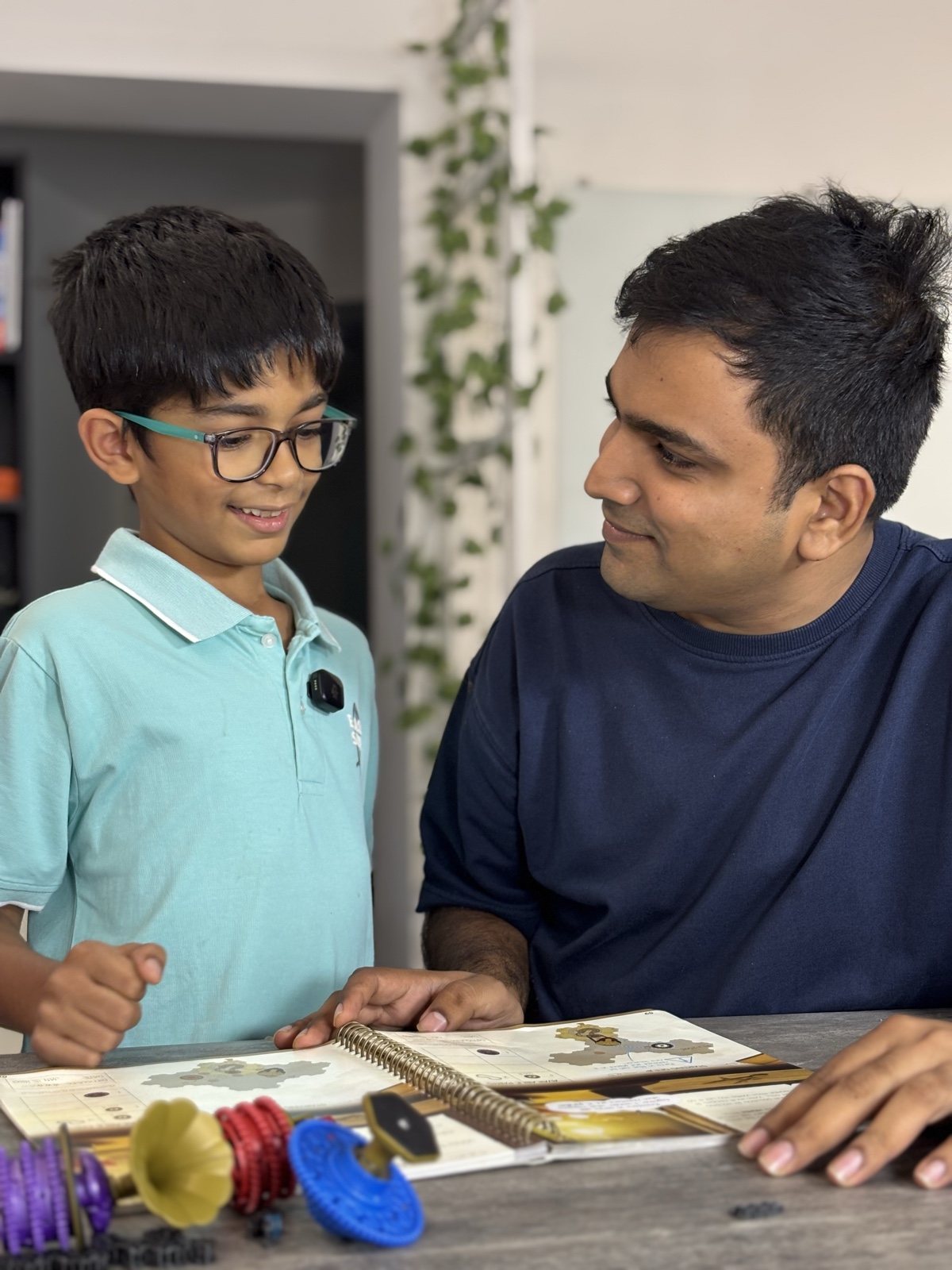
There's a quiet trap in most coding classes: the tutorial that never ends. A child copies the steps, the screen lights up green, and everyone agrees that learning happened. But ask them to build something nobody handed them a recipe for, and the confidence disappears.
At Cubo, we measure progress differently. Not by lessons completed, but by real things finished.
Finishing is a different skill
Writing a line of code is one skill. Deciding what to build, fixing it at 9pm because the game still won't restart, and then showing it to a friend who finds a problem in ten seconds, that's a completely different skill. And it's the one that matters in the real world.
When a project has to work in front of someone else, a few things change:
- Your child stops asking "is this right?" and starts asking "does this work?"
- Mistakes become useful information, not failure.
- "Done" gets a real meaning: someone can actually use it.
What this looks like day to day
A nine-year-old finishing a game doesn't just hand it in. She tries it out with the child next to her, watches them get stuck on level two, and quietly makes it easier before the big show. Nobody told her to. The people playing it told her to.
That instinct (build for someone, then make it better) is what we're really teaching. The tools change every few years. The habit of finishing something real does not.
The first time a child watches a stranger use the thing they made, something clicks that no worksheet can deliver.
If your child would rather build than memorise, that isn't a problem to manage. It's exactly the instinct we grow.